

.svg)

The sleep and mental health connection isn’t just something your therapist throws out when you mention you’ve been tired lately. It’s a clinically-backed, bidirectional relationship that affects everything—mood, stress, focus, and even your long-term risk for depression and anxiety.
We’re not talking about just pulling an all-nighter and being cranky the next day.
We’re talking about how chronic sleep disruption—like regular insomnia or poor sleep patterns—can literally rewire how well (or not) your brain processes emotion, stress, and even fear.
Let’s unpack the real impact this relationship has, and why changing how you sleep might be the biggest mental health move you’ve never considered.
What Counts as Healthy Sleep (And What Doesn’t)
Most people think sleep is just about getting “enough.” But sleep health isn’t just about hitting 8 hours.
Here's what healthy sleep really includes:
- Duration (Ideally 7–9 hours for adults)
- Quality (Deep, uninterrupted sleep)
- Timing (Falling asleep and waking up consistently at similar times)
- Regularity (No big weeknight-weekend swings)
Mental health? That extends beyond just “feeling okay.”
It covers mood, anxiety levels, stress response, cognitive functioning, and even resilience to daily setbacks.
Here’s where it gets tricky: poor sleep and mental stress fuel each other like gasoline and fire.
You worry, so you can’t sleep.
You don’t sleep, so your anxiety worsens.
That’s the definition of a bidirectional link. And it’s brutal.
Quick breakdown:
- Acute sleep loss: pulling an all-nighter, stressful week, jet lag
- Chronic sleep problems: long-standing insomnia, nightmare disorders, sleep apnea contributing to fatigue and distress almost daily
If you're in the second group, your risk of developing depression or anxiety shoots up significantly.
Key takeaway: One bad night? You’ll manage. Bad sleep pattern for weeks or months? Your brain and mood pay the price.
Poor Sleep Isn’t Just Annoying. It’s a Mental Health Risk Factor.
Let’s get real with data.
Almost one-third of U.S. adults struggle with consistent, adequate sleep.
According to the CDC, adults sleeping 6 hours or less are about 2.5 times more likely to experience frequent mental distress compared to those getting more sleep.
Stress, anxiety, and depression? They’re knocking out sleep for millions:
- 74% of adults say stress interferes with their sleep
- 68% blame anxiety
- 55% report depression as a key sleep disruptor
Insomnia isn’t just a nighttime issue—it’s a psychiatric red flag. Up to 90% of people diagnosed with depression report sleep difficulties.
And it’s not chicken-or-egg. It’s both.
Research shows insomnia not only accompanies depression and anxiety—it often drives them, too.
One study found people with chronic insomnia are two to four times more likely to develop depression.
Even scarier?
Insomnia alone increases your risk of developing an anxiety disorder by up to 17 times.
Key takeaway: Treating insomnia isn’t a sleep luxury. It’s a top-tier mental health strategy.
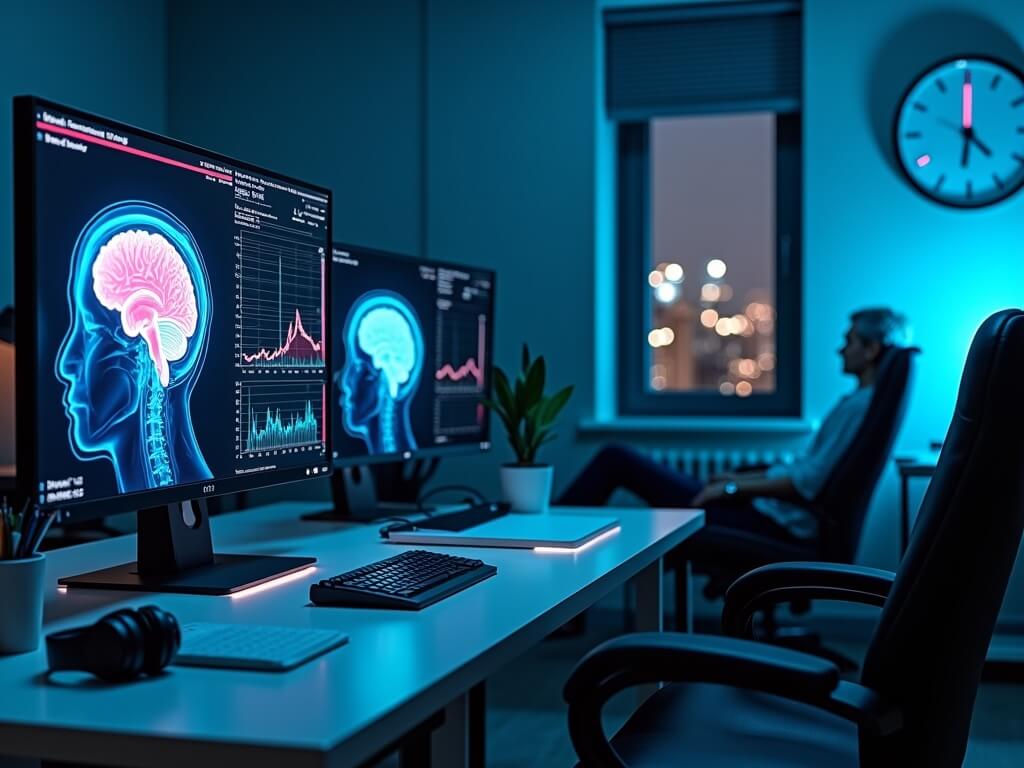
How Poor Sleep Wrecks the Brain (And Your Mood)
Alright, let’s zoom in.
Why does poor sleep send your emotional well-being off the rails?
Start with brain chemistry.
Sleep plays a direct role in emotional regulation, which basically means how stable you are when life throws curveballs.
When you don’t sleep:
- The amygdala (fear and threat center) goes into overdrive
- Prefrontal cortex (the brain’s rational CEO) takes a backseat
That combo?
You’re more likely to snap, spiral, obsess, or crumble—all without real cause.
On top of that, sleep disruption affects:
- Serotonin and dopamine: key neurotransmitters tied to depression and motivation
- Norepinephrine: fuels alertness but spikes with stress and poor sleep
- Cortisol: the stress hormone that should dip at night—but doesn’t when you’re chronically underslept
Ever feel like your brain won’t shut off at night, and then all day your focus is toast?
That’s the HPA axis and cortisol dysregulation in action.
Sleep loss doesn’t just ignore mental health—it rewires it.
Personal Brain Fail: The Time My Sleep Loss Mimicked a Panic Disorder
Few years back, I was working 70-hour weeks during grad school. I figured 4–5 hours of sleep and weekends to “catch up” would be fine.
Except it wasn’t.
I had this three-week stretch of waking up with my heart racing, totally on edge, and convinced something was medically wrong with me. Testing showed perfectly normal vitals. My doctor paused and said, “How’s your sleep?”
Terrible. Obviously.
Three weeks of consistent 7-hour nights, and poof—panic gone.
I wasn’t anxious. I was exhausted. And my brain couldn’t tell the difference.
Key takeaway: Your body doesn’t lie. Sleep deprivation often impersonates anxiety—until you fix the real issue.
The Mental Spiral: How Sleep Problems Turn Into Mood Disorders
So how exactly does sleep go from annoying to clinically damaging?
Cue the vicious cycle.
First, you lose a few nights of solid sleep due to stress or anxiety.
Then, your brain starts associating the bed itself with worry—racing thoughts, frustration, dread.
Next thing you know:
- You’re lying in bed for hours, dread building
- Getting less sleep makes your anxiety worse
- Worsened anxiety disrupts your next night of sleep
...and you’re locked inside the loop.
Here’s what’s happening behaviorally:
- Fatigue sets in → emotional resilience lowers
- You start worrying more → rumination intensifies
- Mental bandwidth drops → less ability to cope with daily stressors
Sound familiar?
That’s why daytime exhaustion and cognitive slowness from poor sleep often mimic or fuel actual depression and anxiety.
Key takeaway: Unchecked insomnia creates a mental chokehold that makes both anxiety and depression stickier and harder to treat.
How Sleep Drives Depression and Anxiety (Not Just the Other Way Around)
Let’s break it down by diagnosis.
For depression:
- Poor sleep is both a symptom and risk factor
- Fragmented, rushed, or light sleep boosts symptoms like low mood and hopelessness
- Chronic insomnia doubles your future risk of depression
And here's the bad news—if you have depression and don’t fix your sleep? You’re more likely to relapse.
For anxiety:
- Trouble falling asleep + racing thoughts = hallmark symptoms
- Many patients develop “sleep anxiety,” fearing another restless night
- Chronic hyperarousal (think: tension, fast heart rate) blocks restorative sleep…and deepens anxiety during the day
In fact, research shows that insomnia combined with anxiety makes all symptoms peak higher than either condition alone.
Even disorders like PTSD and panic disorder often come with nightmares, middle-of-the-night wakeups, and unrested mornings.
Key takeaway: For many patients, basic insomnia treatment would reduce anxiety and depression symptoms by half—even without touching other therapies.
Yes, Fixing Your Sleep Can Improve Your Mental Health (Even Without Meds)
So, can improving sleep reduce symptoms without medication?
Short answer: Yes. And we’ve got strong data backing it.
A meta-analysis of 65 randomized trials (involving over 8,600 people) found that improving sleep—mostly through behavioral means—led to:
- Medium-size reductions in depression and anxiety
- Small-to-medium drops in stress and rumination
- Improved overall mental well-being
No pills, no fancy psychiatric regimens—just better sleep.
What did these trials use?
- CBT-I (Cognitive Behavioral Therapy for Insomnia)
- Digital programs
- Behavior-based group support
And here’s the clincher: the more someone improved their sleep, the bigger their mental health gains.
Straightline logic.
Key takeaway: Better sleep isn’t wishful thinking. It’s a clinically proven intervention for mood and anxiety—meds optional.
For more strategies on this, check out our guide on lifestyle changes to improve depression: https://www.encorahealth.com/blog/lifestyle-changes-depression
What I’ve Seen with Patients (Anecdotally—and Powerfully)
I’ve had patients come in convinced they had treatment-resistant depression.
Nothing worked.
Until we addressed one overlooked piece: they were only sleeping 5 hours a night, and their schedules were all over the place.
Six weeks into CBT-I and regular nightly routines?
Their mood began lifting for the first time in years—without a medication switch.
Not every case is that cut-and-dry, of course.
But if we skip over sleep, we miss one of the most powerful levers for healing the mind.
Key takeaway: If your sleep is chaotic, don’t chase supplement hacks or stack new meds until you try treating the root issue.
Looking for more holistic solutions? Explore how integrative psychiatry and lifestyle interventions support long-term recovery: https://www.encorahealth.com/blog/integrative-psychiatry-lifestyle
Let’s pause here.
Next, we’ll get super practical—diving into the exact science-backed strategies you can use to radically improve both sleep and mental health at home or with professional help…
The Sleep Fix That Saves Teens (and Their Sanity)
Let’s talk about a group getting hammered by poor sleep and rising mental distress: adolescents.
If you’ve got a teen repeatedly dragging themselves out of bed at 7 a.m. for school after doomscrolling until 1 a.m.—you’re watching a biological mismatch in real-time.
Here’s why it matters.
Adolescents naturally shift toward a later sleep phase (called delayed sleep phase), meaning their bodies are hardwired to fall asleep and wake up later.
Pile on early school times, part-time jobs, social pressure, and screens—and teens are chronically sleep-deprived.
That’s not just grogginess. It’s a formula for:
- 2x higher risk of depression symptoms
- Increased social withdrawal and irritability
- Worse emotional regulation and impulsivity
- Lower academic performance and higher dropout risk
One major study showed that teens sleeping fewer than 6 hours were three times more likely to report suicidal thoughts. CDC study on sleep and depression connection: https://www.cdc.gov/pcd/issues/2021/20_0573.htm

Actionable fix?
- Delay school start times where possible (some districts are already doing this with positive results)
- Limit evening screen exposure—especially in the hour before bed
- Encourage relaxing, non-stimulating routines and consistent bed/wake timing, even on weekends
Sleep isn’t a “nice to have” during teen years. It’s foundational to emotional resilience and cognitive clarity.
Key takeaway: Fixing adolescent sleep schedules might be one of the most effective ways to curb the youth mental health crisis: https://www.encorahealth.com/depression
Older and Sleepless: What’s Actually Normal (and What’s Not)
Sleep changes with age—but aging doesn’t mean you’re doomed to wake up every two hours or live in a fog.
Older adults often fall into the trap of thinking poor sleep is just “part of getting older.”
Here’s the truth:
- Yes, sleep architecture shifts (less deep sleep, more light sleep)
- Circadian rhythms tend to advance (earlier bed/wake times)
- Medical issues or medications can fragment sleep
But chronic insomnia, early morning awakenings paired with low mood, or severe fatigue during the day? Not normal—and absolutely fixable.
Sleep problems in older adults are strongly tied to:
- Depressive symptoms
- Cognitive decline risk
- Falling and hospitalization
Older adults with untreated insomnia are also less responsive to antidepressants and have a higher risk for relapse. Sleep deprivation and mental health research: https://pmc.ncbi.nlm.nih.gov/articles/PMC8651630/
The good news? CBT-I works remarkably well in this group—and actually improves energy, memory, and mood.
Key takeaway: Whether you’re 65 or 95, good sleep is possible, and it’s one of the best ways to protect brain and mood health long-term: https://www.encorahealth.com/lifestyle-preventative-care
Night Shifts, Nightmares, and Never-Ending Fatigue
Shift workers are ground zero for sleep and mood chaos.
Rotating schedules, overnight shifts, unpredictable deadlines… all of it wrecks the circadian rhythm, sleep quality, and your brain’s ability to process emotion.
Studies show shift workers are significantly more likely to suffer from:
- Depression
- Anxiety
- Burnout
- Sleep disorders like shift work disorder and insomnia

Your internal clock doesn’t just dislike working overnight—it physically isn’t designed for it.
The effects?
- Cortisol levels stay elevated
- Melatonin release is delayed or disrupted
- Sleep is lighter and more fragmented
- You’re more vulnerable to irritability, mood swings, and even panic attacks
If you’re in shift work, here are a few power plays:
- Use blackout curtains and white noise at home to simulate night
- Stick to the same wake/sleep time even on off days to minimize rhythm disruption
- Use bright light upon waking and limit evening exposure to help retrain your circadian rhythm
- Nap strategically—but avoid long ones close to work
Key takeaway: You can’t change time, but you can protect your mental health by managing your light, routine, and recovery time between shifts: https://www.encorahealth.com/blog/mastering-stress-management
Sleep in Bodies That Hurt and Minds That Race
If you’re living with chronic pain, breathing issues, or conditions like reflux or nocturia—sleep can feel like a constant uphill battle.
And the mental load? Massive.
People with medical illnesses that disturb sleep have higher rates of:
- Depression and anxiety
- Pain catastrophizing
- Rumination and hopelessness
- Poor emotional resilience
Sleep apnea, in particular, is a major (and massively underdiagnosed) contributor to both daytime fatigue and mood disorders in both men and women.
One sleep clinic I worked alongside screened every patient with anxiety or depression for apnea. Turns out over 40% met diagnostic criteria.
And once treated?
- Increased clarity
- Fewer panic-like symptoms
- Better energy and lifted mood
Chronic illness doesn’t mean sleeplessness is inevitable.
But it does mean sleep interventions have to factor in medical treatment, specialized screens (like for restless leg syndrome or REM behavior disorder), and possibly devices (like CPAP for apnea).
Key takeaway: If pain, reflux, snoring, or trips to the bathroom are wrecking your nights—talk to your doctor: https://www.encorahealth.com/anxiety Your sleep and mental health deserve more than white-knuckling through the night.
If You Only Make One Lifestyle Change, Make It Sleep
Let’s wrap.
It’s easy to dismiss sleep as a “background” factor in our emotional lives.
But the science says this—alongside diet and physical activity (https://www.encorahealth.com/blog/online-psychiatry-lifestyle), sleep is one of the three lifestyle pillars that shape your daily resilience, neurochemistry, and mental performance.
We don’t get intermittent fasting for anxiety.
We don’t get antidepressants that magically cure insomnia.
But when we fix sleep—truly, consistently?
- Anxiety symptoms drop.
- Mood lifts.
- Stress becomes manageable again.
I’ve watched marriages improve, job performance rebound, and parenting feel joyful—because people started sleeping again.
If you’ve been stuck in the loop, tired of being tired, unsure whether medication alone is working—look at your sleep.
It’s not a side issue. It’s the framework that holds up the rest of your mental stability.
Key takeaway: Nothing changes if insomnia writes the rules. Start there, build stability—and everything else gets easier to fix.
Need Help? Start Where Sleep and Mental Health Overlap
If what you’ve read here hits close to home, and you’re wondering whether poor sleep is sabotaging your mood, energy, and peace of mind?
Don’t guess alone.
At Encora Health, we specialize in treating insomnia, anxiety, and depression as interconnected—not isolated issues.
Our providers use evidence-based strategies rooted in behavioral sleep science and mind–body health—not just prescriptions.
When you’re ready to feel like yourself again, we’ll help you start with the most foundational reset: your sleep.
Contact Us:
Phone: (866) 334-3006
Email: info@encorahealth.com
Because when your nights make sense, your days finally do too.
And that’s the real power of understanding the sleep and mental health connection: https://www.encorahealth.com/blog/online-psychiatry-lifestyle
